
Keep a consistent diary of what you eat and when physical symptoms show up, then look for foods that are followed by symptoms more often than others. A few weeks of steady logging shows far more than memory can.
Why is it hard to spot trigger foods from memory?
Because the pieces rarely sit next to each other. A symptom can show up hours after a meal, most meals contain several ingredients, and you probably eat many of the same foods every week. Good days are also easy to forget, even though they matter as much as the rough ones.
What are the steps?
- Log every meal. Include the main ingredients, the time of day and a rough size.
- Log every symptom. Note which symptom, how strong it was and when it started.
- Log the good days too. A quick daily check-in shows which days were fine.
- Add sleep and water. Food is only part of the picture.
- Compare after a few weeks. Look for foods that are followed by the same symptom again and again, next to how often you eat them with no symptoms at all.
- Test one idea at a time. An elimination diet, ideally guided by a doctor or dietitian, compares how you feel with and without a food.
- Share what you find. Bring your record to your doctor.
What counts as a pattern?
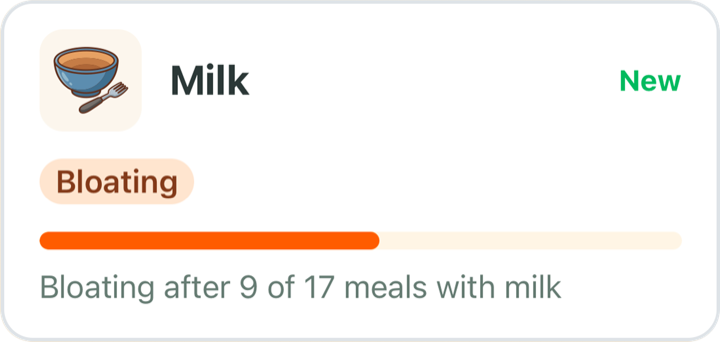
One rough day is not a pattern. A pattern is a food that is followed by the same symptom repeatedly, and noticeably more often than your other foods. The count matters in both directions: how many times the symptom followed the food, and how many times you ate it in total.
How does BiteSense help?
BiteSense does the comparing for you. It splits each meal into foods, tags them with 31 ingredients and traits, and Clues shows which foods and ingredients show up more often before your symptoms, with the counts behind each one. Foods you eat often with no symptom link are listed under No link so far.
A clue shows what lines up in your logs. What it means is for you and your doctor to decide.
What do health organizations say?
Keeping a diary is a standard first step. The NHS says that when a food intolerance is suspected, you may be asked to keep a food and symptoms diary, and that a food intolerance is different to a food allergy.
Common questions
How long should I keep a food diary before looking for patterns?
Long enough to have eaten your usual foods several times, on days with symptoms and days without. For most people that means a few weeks of steady logging and not a few days.
Can a food line up with symptoms by coincidence?
Yes. Foods you eat every day will sit near almost every symptom. That is why it helps to compare against days without symptoms, test one food at a time and talk to your doctor.
Related guides
- What should I track in a food and symptom diary?
- What is a trigger food?
- What is an elimination diet and how can an app help?
Sources
Sources last checked November 2026.