Track four things: what you ate and when, which physical symptoms you felt and how strong they were, how you slept, and how much water you drank. Consistency matters more than detail.
What should you record, and why?
| What to track | What to note | Why it helps |
|---|---|---|
| Meals | Foods and main ingredients, time of day, rough size | Shows what came before a symptom |
| Symptoms | Which symptom, strength, when it started | Lets you compare symptoms against meals |
| Daily check-in | How your body felt overall | Marks the good days as well as the rough ones |
| Sleep | Bedtime and wake time | Shows whether short nights line up with symptoms |
| Water | Roughly how much you drank | Shows whether low water days line up with symptoms |
How detailed does a meal entry need to be?
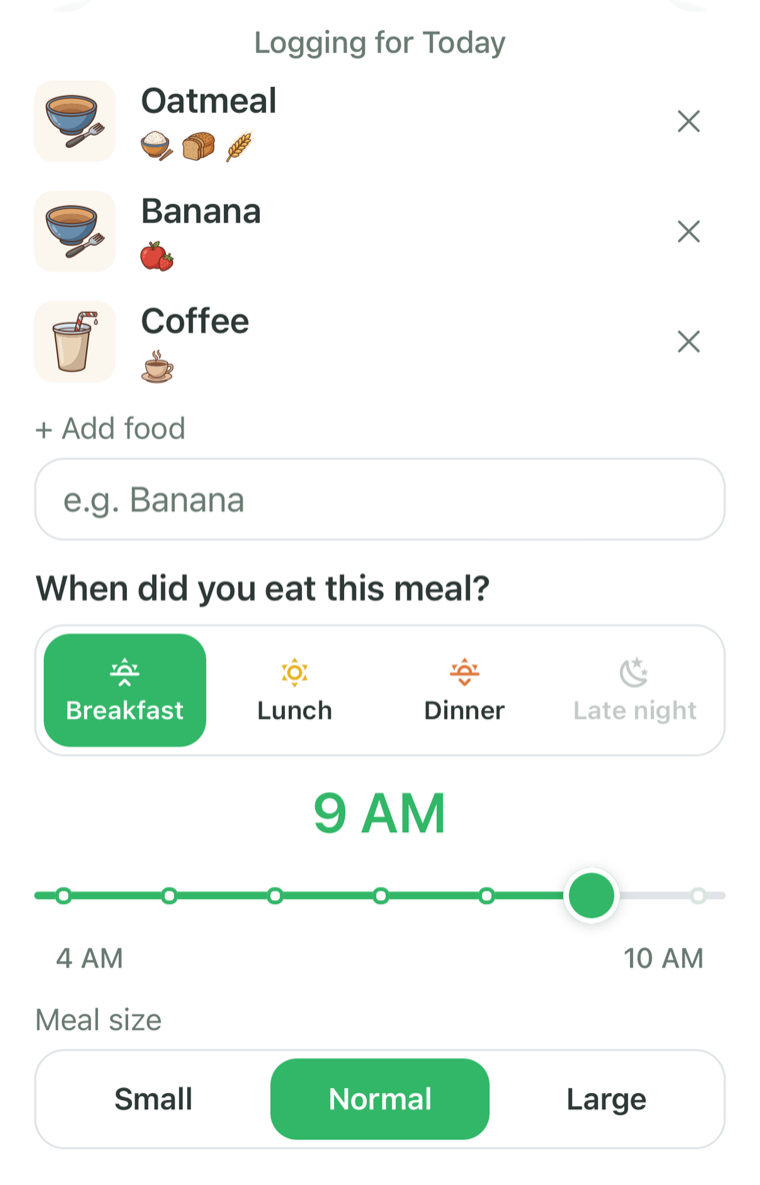
Detailed enough to name the main foods. “Oatmeal with banana and a coffee” is plenty. You do not need exact weights. A rough size, such as small, normal or large, is enough to work with.
What makes a symptom entry useful?
Three things: the symptom, its strength and its start time. Strength shows whether things are getting milder or stronger over time, and the start time is what lets a diary line symptoms up with the meals before them.
What is the most common mistake?
Only logging on rough days. A diary that skips the good days cannot show which foods you eat without any symptoms, and that is half of the picture.
How does BiteSense help?
BiteSense is built around these same four things. You log a meal by typing or saying it, log a symptom with a five face strength scale, answer a one tap daily check-in, and add sleep and water in seconds. Logging is free.
What do health organizations say?
A food and symptoms diary is something doctors ask for. The NHS says you may be asked to keep one when a food intolerance is suspected.
Common questions
Is a paper diary enough?
A paper diary works if you keep it up. The harder part is the comparing, which means going back through weeks of entries by hand. BiteSense does that part for you with Clues.
Should I track things other than food?
Yes. Sleep and water are worth adding, because symptoms can line up with more than meals.
Related guides
- How do I find which foods trigger my symptoms?
- Can sleep and water affect my symptoms?
- What should I bring to a doctor about my symptoms?
Sources
Sources last checked November 2026.