
Bring a written record: which symptoms you had, how often and how strong, what you ate, and anything that seemed to line up. A short summary is easier for a doctor to use than memories of the last few weeks.
What will a doctor want to know?
Usually three things: what you ate, when the symptoms started, and what changed. Those are hard to answer accurately from memory, which is why a record helps.
What should be in your summary?
- Which symptoms you had and how many times
- How strong they were, and whether that is changing
- The time of day they tend to show up
- The foods and ingredients you eat most
- Any foods that seem to line up with symptoms
- Sleep and water, if you tracked them
- Any foods you have been avoiding, and for how long
- Days you did not log, so gaps are clear
How does BiteSense help?
BiteSense builds this summary from your logs. The report covers 90 days, 6 months, 9 months or 12 months, with sections for symptoms, meals, sleep, water, logging gaps and the patterns found in your logs. You choose which sections to include, then export it as a PDF and share it from your iPhone.
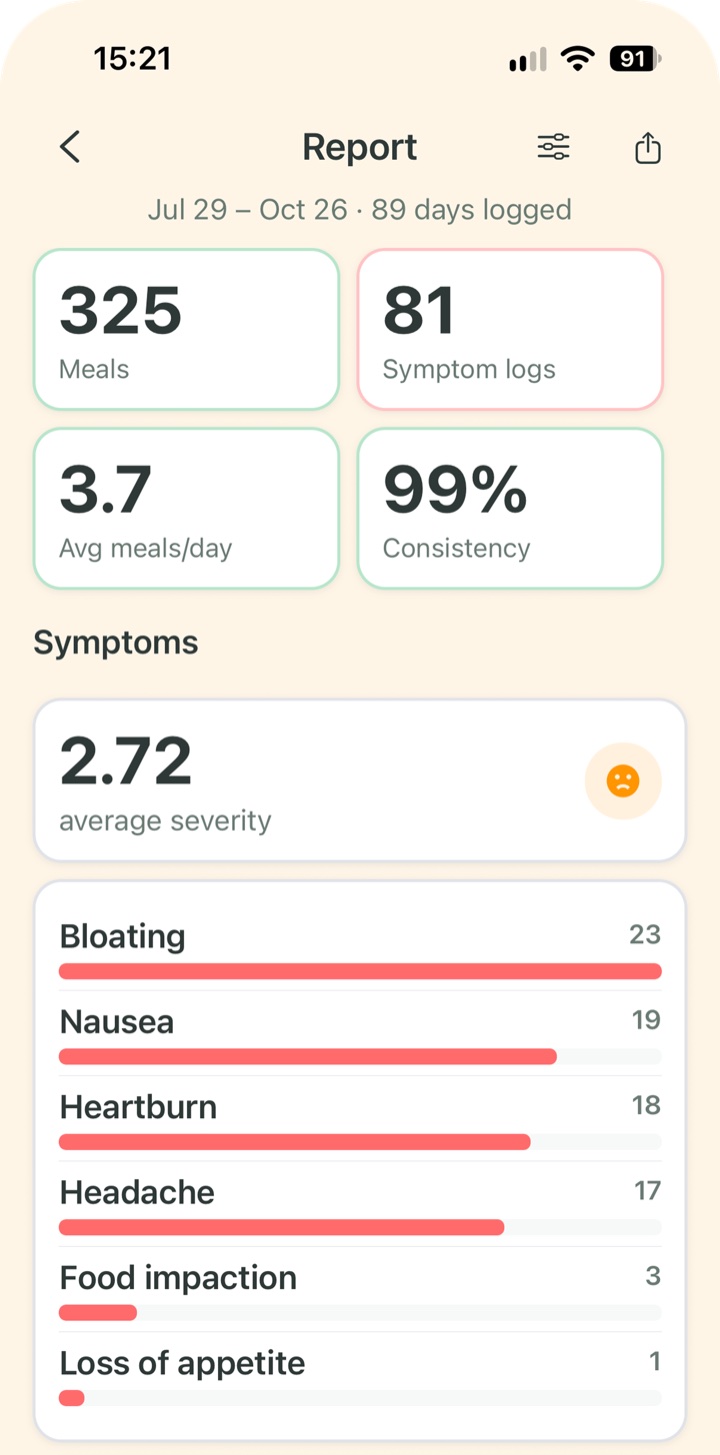
The report shows observed patterns only. It is a Premium feature.
What do health organizations say?
A written record is what doctors ask for. The NHS says that when a food intolerance is suspected, you may be asked to keep a food and symptoms diary.
Common questions
How many weeks of logs should I bring?
Bring what you have. A longer, steadier record gives more to work with, and the BiteSense report starts at 90 days.
Should I wait for an appointment if a symptom is severe?
No. Throat tightness, trouble breathing, or swelling of your face or throat need medical care right away.
Related guides
Sources
Sources last checked November 2026.