
Log each meal with its time of day and size, and log heartburn and related symptoms with their strength and start time. With reflux, when and how much you eat is as useful to record as what you eat.
What is worth tracking with GERD?
- Reflux symptoms. BiteSense lists heartburn, regurgitation, sour taste, chest pain, cough and hoarseness.
- Time of day. Breakfast, lunch, dinner or late night, plus the hour.
- Meal size. Small, normal or large.
- Ingredients and traits. BiteSense tags caffeine, alcohol, spicy, acidic, rich & fatty, fried, chocolate and fizzy automatically.
- Sleep. Bedtime and wake time, so nights can be compared with symptoms.
When to get medical care
Chest pain can have many sources. If it is new, severe or worrying, seek medical care right away.
How does BiteSense help?
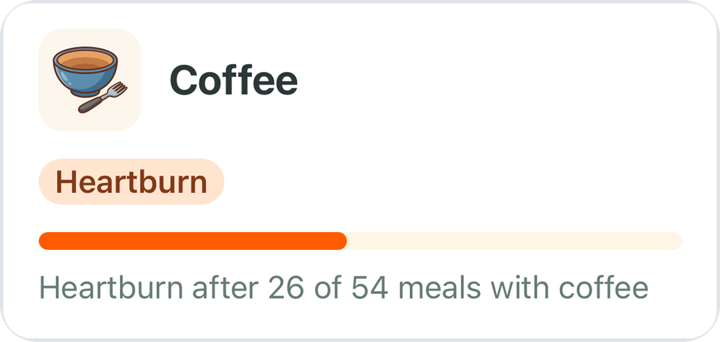
Clues shows which foods and ingredients show up more often before heartburn in your own logs, in plain words with the counts behind them. The report shows the time of day your symptoms tend to be strongest.
Logging is free. Clues, Explore and the report are Premium features.
What do health organizations say?
The US National Institute of Diabetes and Digestive and Kidney Diseases (NIDDK) lists foods and drinks commonly linked to GERD symptoms: acidic foods such as citrus fruits and tomatoes, alcoholic drinks, chocolate, coffee and other sources of caffeine, high-fat foods, mint and spicy foods. It also says that eating meals at least 3 hours before you lie down or go to bed may improve symptoms.
Common questions
Can BiteSense track late meals?
Yes. Every meal has a time of day, including late night, and an hour.
Does BiteSense tell me which foods to stop eating?
No. BiteSense shows patterns in your own logs. Talk to your doctor before changing your diet.
Related guides
Sources
Sources last checked November 2026.