
Use a diary as a record for your allergist, never as a way to decide whether a food is safe. Log your meals, any physical symptoms and their timing, and bring that record to your appointments.
Safety comes first
If you have a food allergy, never use BiteSense to decide whether a food is safe to eat. Throat tightness, trouble breathing, or swelling of your face or throat need emergency care right away. Follow the plan your allergist gave you.
What is worth tracking?
- Meals and ingredients. What you ate, with the main ingredients.
- Physical symptoms. Which symptom, how strong, and when it started. BiteSense lists skin symptoms such as hives and itching, and breathing symptoms such as wheezing.
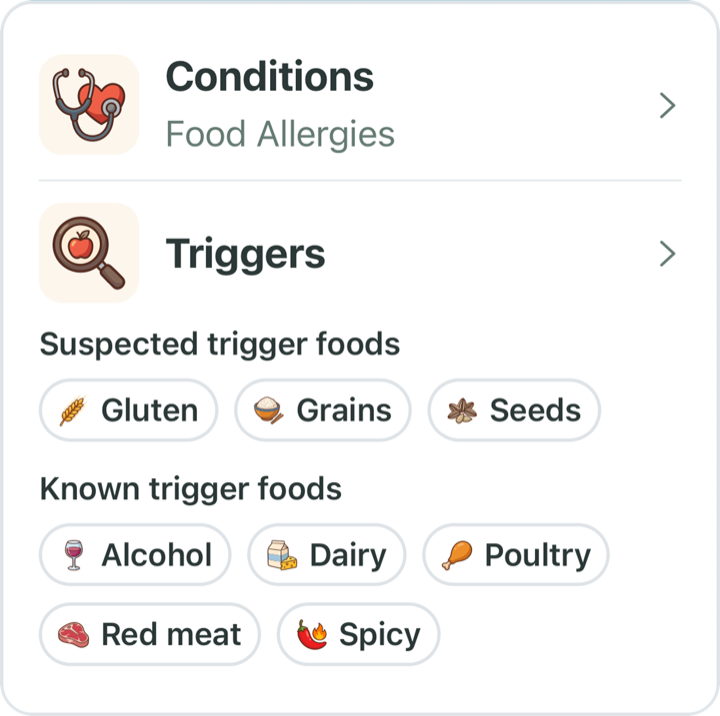
- Your known foods. List the foods you already know bother you in your profile.
- Questions for your allergist. Anything in your logs you want to ask about.
What does BiteSense do when you log throat or breathing symptoms?
It tells you to get them checked. When your logs include throat or breathing symptoms after eating, Clues shows a notice that these should be checked by a doctor.
How does BiteSense help?
BiteSense keeps a dated record of meals and symptoms and turns it into a report you can share with your allergist. It is a personal tracking tool, and it does not test for or confirm allergies.
Logging is free. Clues, Explore and the report are Premium features.
What do health organizations say?
FARE (Food Allergy Research & Education) lists a tight or hoarse throat and trouble breathing or swallowing among severe reaction symptoms. Its guidance for a severe reaction is to use epinephrine at the first sign and call emergency services, which is 911 in the United States. The NHS also notes that a food intolerance is different to a food allergy.
Common questions
Can BiteSense tell me if I have a food allergy?
No. Only a doctor can assess a food allergy. BiteSense is a personal tracking tool, not a diagnostic or medical device.
Should I try an elimination diet for a food allergy on my own?
No. Do not remove or bring back foods on your own if you have a food allergy. Follow your allergist’s plan.
Related guides
Sources
Sources last checked November 2026.